Newquay's Penhallow 'worst UK hotel fire in 40 years'

Penhallow Hotel - Pic: Press Association
The owners of a Cornish hotel destroyed by fire have been fined £80,000 and ordered to pay £62,000 costs for failing to meet fire safety standards.
Three people died as a result of the blaze at the Penhallow Hotel in Newquay in 2007.
The fire at Newquay's Penhallow Hotel was described by firefighters as the worst British hotel fire in 40 years.
The blaze ravaged the hotel, killing three people, on 18 August 2007.
At its peak more than 100 firefighters battled flames 30 feet (9.1m) high, which tore through the 54-bedroom hotel in the Cornish holiday resort shortly after midnight.
The victims, Monica Hughes, 86, her son Peter Hughes, 43 and Joan Harper, 80, were all from Staffordshire.
Mr Hughes, a teacher from Cheslyn Hay, jumped from a third floor window after trying in vain to save his mother.
In March 2011, the hotel's owner, O&C Holdsworth Ltd, of Harrison Road, Halifax, Yorkshire, admitted two charges relating to fire safety breaches.
They failed to ensure fire detectors and alarms were working at the hotel and failed to make an adequate risk assessment before the blaze.
Suitcases in corridor
Two directors of the company, Nicola Burfitt and John McMillan, both denied three charges relating to them personally, with the prosecution saying it was "not in the public interest" to pursue them.

Start Quote

To lose two members of your family is beyond most people's imagination”
John HughesSon and brother of victims
It has been a long road to justice for the families of those who died in the fire.
It was revealed at an inquest in June 2009 that the hotel was not complying with fire safety regulations introduced in 2005.
The regulations stipulated, among other things, that each room must have its own smoke alarm.
Guests giving evidence said the fire alarm could not be heard on the third floor, where all of the people who died were staying.
Witnesses at the inquest also spoke of suitcases being left in the corridor overnight, which hampered their escape.
There was also criticism of some of the building's electrical wiring, which dated back to the 1960s.
The inquest heard from experts that arson was the most probable cause of the fire, which is thought to have started in the hotel bar, but it could not be conclusively proved.
Unanswered questions
Cornwall coroner Dr Emma Carlyon ordered the jury to return open verdicts on all three victims, saying there was insufficient evidence to rule they were unlawfully killed.
Joan Harper, Monica Hughes and Peter HughesJoan Harper, Monica Hughes and Peter Hughes died in the Penhallow Hotel fire
Hotel manager Andy Woollam and his partner Sarah Jane Duffy, the assistant manager, both refused to answer questions regarding fire safety regulations at the hotel during the 18-day inquest.
Christopher Gunn, the night porter on the night of the fire, did the same. He and Mr Woollam gave contradictory evidence to the inquest about events.
Mr Gunn was arrested by Devon and Cornwall Police in 2008 in connection with the fire but later released without charge.
It was not until 2010 that a civil prosecution case began against the hotel's owners and several members of staff by Cornwall Council and Cornwall Fire and Rescue Service for breaches of health and safety laws.
Speaking after the hearing in March 2011, John Hughes, whose mother and brother died, said he hoped lessons would be learnt by the tourism industry.
Mr Hughes said: "I am pleased at least to have an admission of guilt from the owners of Penhallow. It has been hell for the last few years,"
"To lose two members of your family is beyond most people's imagination.
"The best thing that could come out of this is that the tourism agencies and hotels sit up and take note."
The fire also contributed to a decision by Cornwall Fire and Rescue Service to introduce 24-hour cover in the popular resort town, which has had more than a quarter of all fires in the county in the past five years.

Read more...


Police beat and kicked Muslim terror suspect during arrest, court hears

Babar Ahmad, accused of raising funds for al-Qaida, was allegedly assaulted by Met officers in south-west London in 2003
Charing Cross police station
Babar Ahmad was taken to Charing Cross police station, where a custody officer said he was in a 'collapsing state', the court heard. Photograph: Dan Chung for the Guardian
A British Muslim man accused of raising funds for terrorist organisations was subjected to a "sustained and very violent assault" during his arrest by four specialist officers from the Metropolitan police, a court has heard.
The jury at Southwark crown court was told the officers punched, kicked and stamped on Babar Ahmad, during an early morning raid at his home in south-west London in 2003.
At one stage, the court heard, Ahmad, who was accused of raising money for al-Qaida, was forced into the Muslim prayer position as an officer shouted: "Where is your God now?"
Prosecuting counsel Jonathan Laidlaw QC told the jury: "The officers began to shout and swear, calling Babar Ahmad a 'fucking bastard' and a 'fucking cunt', and he was punched and beaten on the floor. On the floor the assault continued as his wife called out for the police to stop."
The assault had continued in the back of a police van where Ahmad was forced on to the floor and punched and kicked.
Laidlaw said: "The officer sitting nearest to Mr Ahmad's head asked him where he was born and when he replied London, that officer punched him in the back of the head. The same officer then lifted Mr Ahmad's upper body and held him in a headlock with both arms. After releasing him [the officer] said: 'You fucking cunt, you'll remember this day for the rest of your life.' "
Laidlaw said the attack left Ahmad with a series of injuries. "There were areas of bruising, reddening and grazes to Ahmad's head and neck, bruising to the chest, areas of bruising to Ahmad's back, extensive bruising and grazing of the arms. In effect, there were injuries all over the victim's body."
Police constables Mark Jones, Roderick James-Bowen and Nigel Cowley and Detective Constable John Donohue all deny assaulting Ahmad in December 2003.
Jurors heard Ahmad was asleep in bed with his wife when he was woken by cries of "police, police" shortly after 5am.
Laidlaw said officers raiding the property would have been briefed that the suspect had received terrorist training and had fought overseas in support of jihad. He said the arrest took place a few months after another terror suspect, Kamel Bourgass, stabbed an anti-terror squad officer to death during a raid on a house in Manchester.
But the prosecutor said that, despite fears Ahmad might present a danger to arresting officers, the reality was quite different.
"Dressed only in his pyjamas and barefooted, Mr Ahmad raised his arms above his head to indicate that he was not going to fight or to present any sort of danger or threat to the police," he said.
The court heard that James-Bowen, the first officer into the bedroom, threw himself at Ahmad, knocking him back against the window, which smashed.
Laidlaw said there was "no complaint" about this but that the officers then violently assaulted the "entirely submissive" Ahmad. He was handcuffed and led downstairs to the prayer room in his house. It was here that he was put in the prayer position and asked: "Where is your God now?", jurors were told.
"The mocking of Mr Ahmad's faith was to continue, and there were, as you will hear, further attempts to humiliate and to embarrass him," Laidlaw said.
The court was told that as part of its investigation into Ahmad's alleged terrorist connections MI5 had bugged the house. The jury was played a 10-minute recording that covered the time of Ahmad's arrest. Although largely indecipherable it was possible to hear screaming, shouting and what appeared to be muffled commands.
Ahmad was taken to Charing Cross police station where he says he was led to a caged area not covered by CCTV and again punched and kicked.
Laidlaw said the custody sergeant reported hearing his screams.
"[The custody sergeant] describes the screams this way: 'I would describe the screaming as what I believed was a man and that he was in prolonged discomfort and pain. It was definitely the sound of pain and not of him shouting out.' "
The custody officer said Ahmad was bloodied and bruised and in "a collapsing state" when he was brought in by the territorial support group officers, who claimed he had been violent.
Ahmad was released without charge shortly after his arrest. But the jury was told he has been in custody in the UK since his rearrest in 2004 following a request from the US over claims he helped raise money to fund terrorism.
The hearing continues.

Read more...

Scottish Election 2011: Alex Salmond out in front with alot of help from his 'friends'

Superficially at least, it’s not that hard to see why Alex Salmond might appear attractive to those who prefer style over substance. After all, he has contrived to present himself in the Scottish Parliament elections like something of a colossus.


Scottish Election 2011: 'arrogant' Alex Salmond books helicopter victory trip
Image 2 of 2
Alex Salmond, First Minister of Scotland Photo: GETTY IMAGES
The astonishing thing is that his opponents have gone out of their way to assist him. His main opponent, Labour’s Iain Gray, has hardly laid a glove on him and, indeed, for the first four weeks and six days of the campaign he didn’t even try – relaunching his campaign to focus on the perfidy of the nationalist leader only ten days ago.
For the Tories, Annabel Goldie, whilst insisting she could keep him under control, made it plain that she’d be happy to continue working with Mr Salmond. Only the mostly distracted, and sometimes demented, Liberal Democrat leader Tavish Scott got stuck in when he wasn’t trying to rescue his party from oblivion, which was most of the time.
It’s also true that long gone are the days when he and his Scottish National Party were the poor relations of politics north of the border.
He travelled the country in a £1000 per hour Bell Long Ranger helicopter – and booked his triumphal entry to Edinburgh 72 hours before the polls even opened - whereas Mr Gray spent the last 24 hours of the campaign in a sleepless dash around the country in a Ford people carrier.
Mr Salmond attended the Royal Wedding on Friday, whereas his old adversary, Gordon Brown ( as well as Tony Blair and the aforementioned Gray) made do with watching it on television.
In spite of wishing to break up her United Kingdom, he has a first class working relationship with the Queen, spending, with his wife Moira, at least one night a year at Balmoral, in the same way as have UK Prime Ministers throughout Elizabeth The Second’s reign. He has generously advised Her Majesty that she would remain head of state of an independent Scotland if he ever succeeds in achieving his main political objective.
And he has struck even closer links with the Prince of Wales – the Duke of Rothesay, when he’s in Scotland – occasionally dropping in for a dram with Charles and Camilla at Birkhall, the heir to the throne’s Deeside retreat.
Whereas at one time Sir Sean Connery was his highest-profile backer he now has a fair old galaxy of stars who insist that Wee Eck ( his popular nickname) is their man. Brian Cox, the actor, and Midge Ure, the pop star, are among those who sing his praises.
But perhaps more importantly, Mr Salmond is being supported by several wealthy Scottish businessmen. Brian Souter, boss of Stagecoach, handed over £500,000 to the SNP’s election war chest, a sum that was matched in no time by another half million in smaller donations. Martin Gilbert, head of Aberdeen Asset Management, which looks after funds in excess of £180 billion and Jim Spowart, founder of Intelligent Finance, also support him for First Minister, although it’s not known of they’re donors, too.
One of his strongest supporters is Sir David Murray, present owner of Glasgow Rangers FC and a leading Scottish entrepreneur, who says he wants Salmond to continue as First Minister but insists he doesn’t want independence.
It is just this sort of support that has created the momentum that has helped drive the SNP to the top of the opinion polls, with a stupendous double digit lead, just as polling stations open for business.
Mr Salmond is playing a canny, if duplicitous, game – asking for the voters to back him as First Minister whilst playing down his demand to end the 300-plus-year political Union with England.
If pressed he’ll say that a good result on May 5 will give him the “moral authority” to continue with his plan to break up Britain. But otherwise the “I (for independence) word” hardly ever leaves his lips.
However, I have no doubt that even Mr Salmond must have watched open mouthed as the Labour effort imploded so spectacularly. It wasn’t just the Battle of the Sandwich Bar, when Mr Gray took refuge in one instead of standing up to anti-cuts protestors, although that was probably one of the campaign’s seminal – and most hilarious - moments.
One of the biggest problems was undoubtedly personal. Even those closest to him would have to admit that Iain Gray, although earnest, diligent and clever, is little more than a dogged plodder – straight out of Central Casting’s image of a traditional Scottish Old Labour loyalist.
And although he insisted it was all deliberate, to spend the bulk of his campaign attacking the Tories, instead of the SNP, was madness. Pure and simple.
Miss Goldie is second only to Salmond in the popularity stakes and she’s confident of her vote holding up reasonably well - in spite of what the polls suggest – and seeks to tell the Scots that they cannot continue to have everything for nothing – free tuition fees and prescription charges being but the latest in a long line of taxpayer-funded freebies.
She’ll still be a distant third come polling day but although she doesn’t admit it, publicly at least, she wants Salmond to win. Although he denies it, too, David Cameron is also backing the Nats, believing that the Westminster coalition could work better with them.
Several of his supporters, including some newspapers, back Alex Salmond personally while claiming to oppose independence. However, from this vantage point the belief that it’s possible to have Salmond without independence – or Eck-Lite, as this column christened the phenomenon – appears hopelessly misguided.
He may be a more attractive choice than a lacklustre Labour leader but to imagine that Alex Salmond can be given a new mandate on Thursday and then subjected to strict Unionist control, thereafter, is dangerously naïve.
It is precisely the same mistake that the Labour devolutionists made in 1997 when they said that giving Scotland back its parliament would kill off nationalism.
Last time I looked Alex Salmond looks very much alive to me. And the polls suggest he will get another shot in the arm on Thursday.
Inch by inch, through a mixture of ineptitude and reckless concession, the United Kingdom is being undermined and Alex Salmond’s smug grin grows wider by the day.

Read more...


Let's face it: none of our environmental fixes break the planet-wrecking project

All of us in the green movement are lost before the planet's real nightmare: not too little fossil fuel – but too much
pudlesmay2
Illustration: Daniel Pudles Photograph: Daniel Pudles
You think you're discussing technologies, and you quickly discover that you're discussing belief systems. The battle among environmentalists over how or whether our future energy is supplied is a cipher for something much bigger: who we are, who we want to be, how we want society to evolve. Beside these concerns, technical matters – parts per million, costs per megawatt hour, cancers per sievert – carry little weight. We choose our technology – or absence of technology – according to a set of deep beliefs: beliefs that in some cases remain unexamined.
The case against abandoning nuclear power, for example, is a simple one: it will be replaced either by fossil fuels or by renewables that would otherwise have replaced fossil fuels. In either circumstance, greenhouse gases, other forms of destruction and human deaths and injuries all rise.
The case against reducing electricity supplies is just as clear. For example, the Zero Carbon Britain report published by the Centre for Alternative Technology urges a 55% cut in overall energy demand by 2030 – a goal I strongly support. It also envisages a near-doubling of electricity production. The reason is that the most viable means of decarbonising both transport and heating is to replace the fuels they use with low-carbon electricity. Cut the electricity supply and we're stuck with oil and gas. If we close down nuclear plants, we must accept an even greater expansion of renewables than currently proposed. Given the tremendous public resistance to even a modest increase in windfarms and new power lines, that's going to be tough.
What the nuclear question does is to concentrate the mind about the electricity question. Decarbonising the economy involves an increase in infrastructure. Infrastructure is ugly, destructive and controlled by remote governments and corporations. These questions are so divisive because the same world-view tells us that we must reduce emissions, defend our landscapes and resist both the state and big business. The four objectives are at odds.
But even if we can accept an expansion of infrastructure, the technocentric, carbon-counting vision I've favoured runs into trouble. The problem is that it seeks to accommodate a system that cannot be accommodated: a system that demands perpetual economic growth. We could, as Zero Carbon Britain envisages, become carbon-free by 2030. Growth then ensures that we have to address the problem all over again by 2050, 2070 and thereon after.
Accommodation makes sense only if the economy is reaching a steady state. But the clearer the vision becomes, the further away it seems. A steady state economy will be politically possible only if we can be persuaded to stop grabbing. This in turn will be feasible only if we feel more secure. But the global race to the bottom and its destruction of pensions, welfare, public services and stable employment make people less secure, encouraging us to grasp as much for ourselves as we can.
If this vision looks implausible, consider the alternatives. In the latest edition of his excellent magazine The Land, Simon Fairlie responds furiously to my suggestion that we should take industry into account when choosing our energy sources. His article exposes a remarkable but seldom noticed problem: that most of those who advocate an off-grid, land-based economy have made no provision for manufactures. I'm not talking about the pointless rubbish in the FT's How To Spend Itsupplement. I'm talking about the energy required to make bricks, glass, metal tools and utensils, textiles (except the hand-loomed tweed Fairlie suggests we wear), ceramics and soap: commodities that almost everyone sees as the barest possible requirements.
Are people like Fairlie really proposing that we do without them altogether? If not, what energy sources do they suggest we use? Charcoal would once again throw industry into direct competition with agriculture, spreading starvation and ensuring that manufactured products became the preserve of the very rich. (Remember, as EA Wrigley points out, that half the land surface of Britain could produce enough charcoal to make 1.25m tonnes of bar iron – a fraction of current demand – and nothing else.) An honest environmentalism needs to explain which products should continue to be manufactured and which should not, and what the energy sources for these manufactures should be.
There's a still bigger problem here: even if we make provision for some manufacturing but, like Fairlie, envisage a massive downsizing and a return to a land-based economy, how do we take people with us? Where is the public appetite for this transition?
A third group tries to avoid such conflicts by predicting that the problem will be solved by collapse: doom is our salvation. Economic collapse, these people argue, is imminent and expiatory. I believe this is wrong on both counts.
Last week something astonishing happened: Fatih Birol, the chief economist of the International Energy Agency, revealed that peak oil has already happened. "We think that the crude oil production has already peaked, in 2006." If this is true, we should be extremely angry with the IEA. In 2005 its executive director mocked those who predicted peak oil as "doomsayers". Until 2008 (two years after the IEA now says it happened) the agency continued to dismiss the possibility that peak oil would occur.
But this also raises an awkward question for us greens: why hasn't the global economy collapsed as we predicted? Yes, it wobbled, though largely for other reasons. Now global growth is back with a vengeance: it reached 4.6% last year, and the IMF predicts roughly the same for 2011 and 2012. The reason, as Birol went on to explain, is that natural gas liquids and tar sands are already filling the gap. Not only does the economy appear to be more resistant to resource shocks than we assumed, but the result of those shocks is an increase, not a decline, in environmental destruction.
The problem we face is not that we have too little fossil fuel, but too much. As oil declines, economies will switch to tar sands, shale gas and coal; as accessible coal declines, they'll switch to ultra-deep reserves (using underground gasification to exploit them) and methane clathrates. The same probably applies to almost all minerals: we will find them, but exploiting them will mean trashing an ever greater proportion of the world's surface. We have enough non-renewable resources of all kinds to complete our wreckage of renewable resources: forests, soil, fish, freshwater, benign weather. Collapse will come one day, but not before we have pulled everything down with us.
And even if there were an immediate economic cataclysm, it's not clear that the result would be a decline in our capacity for destruction. In east Africa, for example, I've seen how, when supplies of paraffin or kerosene are disrupted, people don't give up cooking; they cut down more trees. History shows us that wherever large-scale collapse has occurred, psychopaths take over. This is hardly conducive to the rational use of natural assets.
All of us in the environment movement, in other words – whether we propose accommodation, radical downsizing or collapse – are lost. None of us yet has a convincing account of how humanity can get out of this mess. None of our chosen solutions break the atomising, planet-wrecking project. I hope that by laying out the problem I can encourage us to address it more logically, to abandon magical thinking and to recognise the contradictions we confront. But even that could be a tall order.

Read more...

Libyan rebels to receive £1.8 billion trust fund

Libya's opposition is to get access to a special $3 billion (£1.8 billion) trust fund established by its Western backers to finance the breakaway regions fighting Col Muammar Gaddafi.

Libya's opposition is to get access to a special $3 billion (£1.8 billion) trust fund established by its Western backers to finance the breakaway regions fighting Col Muammar Gaddafi.

The Libya Contact Group will seek to unfreeze Libyan state assets to replenish the rebels' coffers through the initiative at a meeting in Rome.
That would include allowing the rebels to sell oil from territory under their control, but there are legal questions over who exactly owns the oil, given that Gaddafi is still in power.
There are also legal issues over whether assets owned by the regime and seized abroad could be given to the Libyan leader's opponents.
The rebels' National Transitional Council has said it urgently needs supplies of food and medicine as well as salaries for state employees.
The council said that without urgent funds from the West, the rebel leadership will face food shortages within three to four weeks and a humanitarian crisis.
The meeting, which brings together 22 Western and Middle Eastern countries along with the UN, African Union and Arab League, will be attended by Hillary Clinton, the US Secretary of State, and Foreign Secretary William Hague. The money could then be paid back when the issue of oil sales is resolved.
His French counterpart, Alain Juppe, said: "It's not easy. There are Libyan assets that are frozen and for legal reasons unfreezing them is difficult."
The French foreign minister said a key objective of the meeting was to build contacts with officials who have already defected from the Gaddafi regime and others who want to leave it.
"There are a lot of officials from Tripoli who want to talk. We are going to try to coordinate," he said.

Read more...

Justin Bierber Just...... Salena

Justin Bieber Calls Selena Gomez ‘One of My Best Friends’


Even afterwards actuality spotted smooching Selena Gomez in the Caribbean recently, Justin Bieber is still insisting they’re aloof friends.

When Ryan Seacrest asked Bieber on his KIIS-FM radio appearance Monday what he should say to bodies who accept apparent video or photos of Bieber, 16 and Gomez, 18, accepting cozy, Bieber didn’t hesitate.

“Just acquaint ‘em that she’s, like, one of my best friends,” he said enthusiastically.
Seacrest didn’t push, but did ask what cine they saw during a contempo cine date in Burbank, Calif.

“We saw No Strings Attached,” Bieber said.

“That’s what I charge appropriate there,” Seacrest joked, apropos to the pair’s best of movie, which follows a brace – played by Natalie Portman and Ashton Kutcher – who try to abide aloof accompany with assertive added benefits.

Read more...

Shia Labeouf @ Bar Fight

Shia Labeouf Handcuffed and Released After Bar Fight


Shia Labeouf was placed in handcuffs by badge afterwards a action bankrupt out in the aboriginal hours of Saturday morning, February 5. The “Wall Street 2: Money Never Sleeps” amateur was complex in an argument with addition man alfresco the Mad Bull’s Tavern in Sherman Oaks, California, afterwards he was reportedly alleged a “f****t” by addition who asked for an autograph.

“My adherent saw Shia, and told me. I capital to get a account with him so I went over to his table, sat bottomward abutting to him, and told him I was a fan of his,” Mark Mastro told Radar Online. “I alleged him Mr. LeBeouf. He didn’t demand annihilation to do with me. He said he aloof capital to arctic and banned to do a photo. I absolved away.”

Later, alfresco the bar, Mark and a acquaintance approved afresh to allocution to the 24-year-old star, afore calumniating him with the gay slur.

Read more...

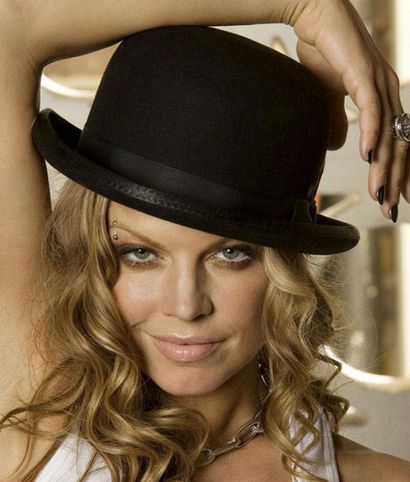
Fashionable Fergie

Fergie and her Fashion


Fergie certainly knows how to draw a crowd with her fashion choices. Over the years, she’s gone from frocky horror show to gorgeous, glamour puss chic. She’s experimented with some extreme looks, with mixed results. Last year she upped the style factor when she appeared in the hit Hollywood musical Nine, alongside Dame Judi Dench and Penelope Cruz. And to add to her burgeoning career, she’s just announced that her debut fragrance, Outspoken, will be released in September. She told WWD.com how the name reflects her style: “From my music to my wardrobe, my style is all about speaking up and making a statement.”

She’s hot. She’s funny. She’s Fergie and she dresses really well. Despite her critics, Fergie continues to impress us with her catchy songs, soulful voice and sexy body. And her gigs prove it. Having just been named the new MAC Viva Glam Spokesperson, Fergie is on her way to becoming the next big IT girl. And what better way to jump on the Fergie bandwagon than to attempt to dress like her.

In order to pull of an all-black outfit, you must make sure that your black attire is not cheap. That’s right. Invest in these items and they will not only last longer but look better, too.

Pants: Just because it’s all black doesn’t mean it has to be boring. Fergie dresses up the look with a pair of satin pants and patent leather pumps. While Fergie’s pants probably cost $900 and were custom made for her, you too can achieve the look. Try bebe’s Glamour Satin Pintuck Pant. They are moderately priced at $129 and will likely last a season. Or two.

If you aren’t into shinny look but still want to rock black bottoms, try the Armani Exchange Zip Detail Pant. They are cheaper at $88 and the cotton material will be ideal for those days when you just want to hide your body as opposed to display it.

Shirt: It’s a simple black shirt and they sell them everywhere. Particularly at an Express near you. Or a Gap. If Sharon Stone can wear a Gap shirt to the Oscars then you can certainly wear a Gap shirt to any club. If worn the correct way, of course.

Shoes: Patent leather pumps can always dress up an outfit, even if they’re black. If you’re on a budget, try Aldo’s Bentona. If you laugh at budgets and really just want a great shoe with an even greater name attached, try the Jimmy Choo Owen Patent Leather Peep Toe. Yes, they’re $365. And yes, they’re Jimmy Choo.

Handbags: You can rest assure that like her pants, Fergie’s bag probably cost more than your rent. For the year. You can either accept that you’re not a rich celebrity and go with the knock off or you can do the right thing and buy yourself a nice handbag that will last years. For the authentic buy, check out the Louis Vuitton Epi Leather Madeleine at $1000. If that price makes you shudder but you still want to come close to looking like a million bucks, try the Lockit MM Black from SophiasReplica.com. I promise I won’t tell. But the bag might.

Sunglasses: Sunglasses aren’t only meant to protect your eyes from the sun. They can also be used to protect your eyes from glaring paparazzi and/or nosy parents. Good thing Diddy made it acceptable to wear shades at night. To finish up the look, try the Ray Ban RB3293. Ray Bans typically run between $119 and $200. If you’re hard up for cash and loose most of your sunglasses anyway, try the F7978 Aviators from Forever 21 for a whopping $5.80.

Read more...

Fergie turns super

Fergie: Black Eyed Peas Will Turn Super Bowl into a ‘Party


Die-hard Green Bay Packers and Pittsburgh Steelers admirers will accept at atomic one affair to acclamation about calm appear Sunday: a Super Bowl halftime appearance by the Black Eyed Peas – whose singer, Fergie, promises will one for the almanac books.

“It’ll be a affair in the average of the game,” she promises PEOPLE. “All of the sudden, whether your aggregation is acceptable or losing, we demand to accomplish you accept a acceptable time. That’s our goal.”

With a arranged army of football admirers set to ample Cowboys Stadium in Arlington, Texas, Fergie and bandmate Taboo, both 35, are already activity the “nervous excitement,” she says.

“It’s a gig that everybody wants,” Fergie notes. “It feels so accustomed with us partnering up with the NFL because we’re sports admirers and we address a lot of sports anthems. It’s what we do.”

She adds: “It’s a acceptable aggregate – like chips and salsa.”

The Black Eyed Peas additionally performed at a Super Bowl Bash hosted by Sports Illustrated on Friday.

Meanwhile, amid the army due on Sunday, Fergie says she’ll accept some admirers of her own: bedmate Josh Duhamel and her dad. Duhamel, 38, flew in on Friday, and she took her father, a above football coach, as her “date” to an NFL dinner.

So what about activity alfresco her music career? Fergie, who aftermost ages acclaimed her additional ceremony with Duhamel, says she doesn’t “go best than two weeks” after seeing her husband.

“Of course, there’s additionally iChat and Skype, but it’s absolutely aloof advantageous attention,” she says. “Communication and bluntness – those are the keys for me.”

Oh, and one added thing, she adds: “Yeah, he’s gorgeous.”

Read more...

Elton Commented Lady

Gaga is next ‘Queen of Pop’: Elton

Pop adept Elton John believes that Lady Gaga will administration as the ‘Queen of Pop’ in the years to appear as she is ashore and respectful.

The ‘Rocket Man’ hitmaker aboriginal teamed up with the 24-year-old pop brilliant for a achievement at the Grammy Awards aftermost year and afresh recorded a affiliation for his latest cine project, ‘Gnomeo and Juliet’.

Since again they accept become abutting accompany and John is assertive that the ‘Poker Face’ hitmaker will accept a continued career as she is so modest, Contactmusic reported. “I adulation her, she’s actually amazing. We’ve become friends. What I like about the Gaga best is that she’s amazingly affable and admiring to anybody about her. What I admired best about John Lennon is that he was like that. He already gave my mum a lift to the airport and came to my agent’s wedding,” said the 63-year-old singer.

“The Gaga is like that. But the greatest affair about her is that she manages to let anybody anticipate they apperceive aggregate about her but no one knows anything,” he said.

“She’s a astounding star, absolutely addition who will be demography on the old sods like me, McCartney and Rod Stewart accomplishing big tours for years to come. Pure genius,” he added.

Read more...

copyright Oxkoon Inc.