Augmented reality has come a long way since we first talked about it two years ago. Though the technology itself remains largely in its experimental phase, its potential for future applications of use is tremendous. Recently, Sony has been working on abit of AR themselves and they call it SmartAR.
This technology enables additional information to be displayed on Sony’s device screens such as virtual objects, or images and texts that cannot be identified by visual perception alone (see video below).
The technology employs the markerless approach, which means users won’t need to use any special markers such as 2D barcodes. The object captured by the camera is quickly recognised and is then tracked at high-speed along with the movement of the camera, as it is displayed over the actual 3D space.
Google and Verizon's net neutrality proposals examined, we wave goodbye to Google Wave, find out about a Facebook users' union, look at the last.fm of academic study - Mendeley, and hear Charles Leadbeater's thoughts on using the web to collaborate..
A laptop is a personal computer designed for mobile use and small and light enough to sit on one's lap while in use.[1] A laptop integrates most of the typical components of a desktop computer, including a display, a keyboard, a pointing device (a touchpad, also known as a trackpad, and/or a pointing stick), speakers, and often including a battery, into a single small and light unit. The rechargeable battery (if present) is charged from an AC adapter and typically stores enough energy to run the laptop for two to three hours in its initial state, depending on the configuration and power management of the computer.
Laptops are usually shaped like a large notebook with thicknesses between 0.7–1.5 inches (18–38 mm) and dimensions ranging from 10x8 inches (27x22cm, 13" display) to 15x11 inches (39x28cm, 17" display) and up. Modern laptops weigh 3 to 12 pounds (1.4 to 5.4 kg); older laptops were usually heavier. Most laptops are designed in the flip form factor to protect the screen and the keyboard when closed. Modern tablet laptops have a complex joint between the keyboard housing and the display, permitting the display panel to swivel and then lie flat on the keyboard housing. They usually have a touchscreen display and some include handwriting recognition or graphics drawing capability.
Laptops were originally considered to be "a small niche market" and were thought suitable mostly for "specialized field applications" such as "the military, the Internal Revenue Service, accountants and sales representatives". But today, there are already more laptops than desktops in businesses, and laptops are becoming obligatory for student use and more popular for general use. In 2008 more laptops than desktops were sold in the US and it has been predicted that the same milestone will be reached in the worldwide market as soon as late 2009.
Wikipedia bang-up Jimmy Wales: "We point to the results"
Continue account the capital story
Related stories
* Wikipedia unlocks alienated pages
* Wikipedia denies editors' exodus
* Wikipedia's approaching in Africa
Wikipedia is too complicated for abounding humans to adapt admitting announcement itself as "the chargeless album that anyone can edit", its architect has said.
Jimmy Wales told BBC News the website wants a new bearing of contributors, including added women.
The online encyclopedia, which is 10 years old on 15 January, is the world's fifth a lot of accepted site.
It aims to access its users from 400m to 1bn by 2015. But advance requires a new interface, said Mr Wales.
"We accept to abutment our old ability users because they body the site," he said. "But we aswell charge to accept a access for new users."
He said a lot of humans were "afraid" to accord to the website by the sometimes complicated cipher - accepted as Wiki mark-up - bare to architecture entries.
Continue account the capital story
“Start Quote
Humans thought: 'let's accord the guy the money so he'll go away'”
End Quote Jimmy Wales
"If you bang adapt and you see some Wiki syntax and some camp table anatomy - a lot of humans are actually afraid.
"They're acceptable humans and they don't wish to breach something.
As able-bodied as initiatives such as "adopt a user", that allows accomplished Wikipedians to yield a new user beneath their wing, he said his for-profit aggregation Wikia had been accomplishing a lot of plan designing simple "what you see is what you get" alteration tools.
"We're absolution all of that accessible antecedent and Wikipedia will apparently accept some of that."
'Ugly mug'
However, Mr Wales said that one change he would not accomplish would be to the site's banking model.
It currently operates as a not-for-profit organisation adjourned by donations from its users.
"We accept just accomplished our fundraiser for the year - we aloft $16m (ВЈ10m) faster than we accept anytime done it before," he said.
Read more...
Afghanistan war logs: Wikileaks founder rebuts White House criticism
Julian Assange rejects accusation that publishing thousands of secret US military files about the war in Afghanistan has compromised America's national security
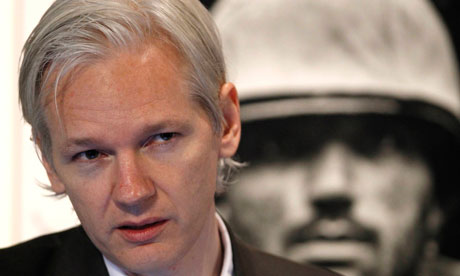
Wikileaks founder Julian Assange speaks a news conference at the Frontline Club in central London. Photograph: Andrew Winning/Reuters
The founder of the whistleblowing website Wikileaks today defended his decision to publish thousands of secret US military files about the war inAfghanistan, faced with criticism from the White House for placing troops in danger.
Julian Assange said his organisation was currently working through a backlog of further secret material and was expecting a "substantial increase in submissions" from whistleblowers after one of the biggest leaks in US military history.
The documents have revealed unreported incidents of Afghan civilian killings and information about secret operations against Taliban leaders, as well as highlighting US fears that Pakistan's intelligence service was aiding the Afghan uprising.
Assange rejected accusations that the leak had compromised America's national security. "We are familiar with groups whose abuse we expose attempting to criticise the messenger to distract from the power of the message," he said.
"We don't see any difference in the White House's response to this case to the other groups that we have exposed. We have tried hard to make sure that this material does not put innocents at harm. All the material is over seven months old so is of no current operational consequence, even though it may be of very significant investigative consequence."
Speaking at a press conference at the Frontline Club in central London, Assange said that the 90,000 leaked US military documents about the war in Afghanistan would help shape understanding of the past six years of fighting.
Earlier, the White House said the leaks "could put the lives of Americans and our partners at risk, and threaten our national security".
It said that Wikileaks had made no effort to contact US security services, but insisted that what it called the "irresponsible leaks" would not "impact our ongoing commitment to deepen our partnerships with Afghanistan and Pakistan; to defeat our common enemies; and to support the aspirations of the Afghan and Pakistani people".
In London, the security minister Lady Neville-Jones, former chair of the UK's joint intelligence committee, described the leak as "really serious stuff" and questioned how the documents had been obtained.
"We don't know how they got that material – it may be a combination of leaking of documents, but also one strongly suspects they have hacked into systems as well.
"This is a very, very big story. But if you stop to think about it for a moment, military systems have to be secure because people's lives are at stake."
The Guardian, along with the New York Times and German weekly Der Spiegel, were given access to the archive and have spent several weeks investigating the logs. In order not to compromise intelligence sources or to put forces at risk, the Guardian has only published a selection of the logs, relating to significant events.
The White House national security adviser, General Jim Jones, stressed that the documents related to a period from January 2004 to December 2009, during the administration of President George Bush and before President Obama ordered a "surge" in Afghanistan.
"President Obama announced a new strategy with a substantial increase in resources for Afghanistan, and increased focus on al-Qaida and Taliban safe havens in Pakistan, precisely because of the grave situation that had developed over several years," he said.
Labour leadership candidate David Miliband, said the "war logs" showed that the war could not be won by military means alone.
"We cannot kill our way out of an insurgency. Instead, the battle for power is fought in the minds of the local population, insurgents and western publics. The purpose of military effort and civilian improvement is to create the conditions for political settlement.
"There is now a race against time to persuade the Afghan people that the correct strategy is in place and show our own people it can succeed. Better Afghan security forces, better police, better schooling and economic opportunities are all vital but not enough. None of them are durable or possible without a political settlement."
Miliband, the former foreign secretary, said any peace settlement "must include the vanquished as well as the victors" and urged the government in Kabul to involve Afghans in "defining a political endgame".
Elsewhere, experts analysed the damage inflicted on the war effort by the leak. British military expert professor Michael Clarke, director of the Royal United Services Institute thinktank, said the leaked files were less damaging than the Abu Ghraib Iraqi prisoner abuse scandal but would prove awkward for politicians.
"There is no doubt that the leaks are politically pretty damaging. The papers give an impression of a lack of military discrimination in how operations were conducted. They are also appearing at the worst possible time, particularly in the United States, because people are looking for an exit strategy. This is old bad news at a new bad time."
In the US, the chairman of the Senate foreign relations committee and former Democrat presidential candidate, John Kerry, responded to the leak with a direct challenge to the administration. "However illegally these documents came to light, they raise serious questions about the reality of America's policy toward Pakistan and Afghanistan," he said.
"Those policies are at a critical stage and these documents may very well underscore the stakes and make the calibrations needed to get the policy right."
Googlehas won its five-year legal battle with Louis Vuitton over trademark use.
Google has won a crucial victory in a five-year-long legal battle with Louis Vuitton, which means the internet search engine is not liable when people use the luxury goods maker's trademarks, such as Dior and Moet & Chandon, in online advertising campaigns.
But the judgment also reverses the earlier opinion of one of the court's own advisers, meaning that advertisers may still find themselves being sued by the owner of the trademark they are using in their campaign.
It could force Google to reverse its controversial decision to allow any advertiser to bid for trademarks in its AdWords system, which creates the sponsored links that appear above and alongside the blue search results on its website.
Google allows rival firms to bid for each other's trademarks. So if a web searcher looks for "Barclays", the sponsored links could include adverts from Lloyds TSB or Nationwide as they would also be allowed to bid to have their adverts triggered by the word "Barclays". Google claims that this leads to better search results for users, but when it opened up trademarks to all bidders in the UK and Ireland two years ago it invoked a storm of protest. While it has made similar moves in dozens of other countries it has held back from opening up AdWords in any other European jurisdictions.
Louis Vuitton was furious that Google's search engine was being used by sellers of counterfeit or fake designer goods to advertise their wares and went after the highly profitable search engine itself. Google stressed during the case, however, that it has strict policies that forbid the advertising of counterfeit goods.
The European Court of Justice (ECJ) has made it plain that Google should not be held liable for trademark misuse, adding that its AdWords system is an "information society service" under the terms of EU law. Crucially, this means Google does not have to monitor everything that goes on in AdWords, it must merely react swiftly when a trademark owner notifies it of any infringement.
But the ECJ added that advertisers who do not make it plain that they do not have any commercial link with the brand owner can still be sued by the trademark's rightful owner.
The decision of the European Court of Justice may force Google to stop selling trademarks this side of the Channel unless advertisers can reach their own industry agreement about their use online. A Google spokesman said it was reviewing the situation and recommended that advertisers who are already using trademarks in their advertising campaigns should take legal advice.
"Google have dodged the bullet on this one," said Michael Gardner, partner at Wedlake Bell. "AdWords is a key money earner for them so this is a big legal victory for them. But advertisers who do use other people's brand names as part of their search engine strategy are still potentially in the firing line."
He added that the situation could worsen as the ECJ is currently hearing a case by Interflora against Marks & Spencer, which could extend the scope for advertisers to be sued where the trademarks concerned are well known or have a reputation.
"For the time being, if an advertiser wants to use other people's trademarks as Adwords they will have to make clear that there is no link between themselves and the brand owner whose trademark is used in the AdWord service. If the advertiser gets it wrong they may open themselves to an expensive legal claim," he added. "Google, however, will be able to sit on the sidelines as a spectator and keep the money rolling in."
In a blog post, Google's senior litigation counsel Dr Harjinder S. Obhi said the fact the ECJ ruled that the European law which protects internet-hosting services also applies to Google's AdWords advertising system "is important because it is a fundamental principle behind the free flow of information over the internet".
Forbes Magazine reports Bill Gates as having a net worth of $46.5 billion dollars, making him the richest person of the world.
He fell in love with the computer at a very young age and created Microsoft while his friends were still getting into trouble.
Bill Gates was recently asked why he closed his Facebook account and opened a Twitter feed. His reply, “I had too many people that I don’t know wanting to be my ‘friend.’ Facebook is about who you know; Twitter is about what you know.”
It is said that he is a very hardworking and benevolent person. The world has been talking about his secrets of success for many years. When asked what they were, he offered his five-point master formula of success:
1-Passion
2-Intelligence
3-Integrity
4-A Good Team
5-Leadership
Read more...
The latest episode of the Robots podcast takes a closer look at the emergence of communication - and how it can be studied using robots. The first part features an interview with Sara Mitri, an interdisciplinary researcher at Switzerland's EPFL and the University of Lausanne, Switzerland. Mitri and colleagues have taken an unusual approach to the problem: Using the ground-based S-Bot robots (pictured above) as a model for biological organisms, they used artificial evolution to study complex behaviors like communication. And as the broad media coverage of her recent publications in Current Biology and PNAS show, the advantages of this approach have not gone unnoticed: While retaining many of the real-world complexities present in biological systems, the robotic models allow complete access to all model parameters. And there is another key advantage: Today very little is known about the evolution of phenomena like communication, because they leave no trace in the fossil record. By conducting artificial evolution, this work allowed to reconstruct part of that missing evolutionary history and shed light on the origins of communication in all animals, from simple cells to us humans. In the second part of the podcast, Jürgen Jost, director of the "Complex Structures in Biology and Cognition" group at Leipzig's Max Planck Institute discusses the question of intentionality of robot communication. Tune in!
A laptop is a personal computer designed for mobile use and small and light enough to sit on one's lap while in use.[1] A laptop integrates most of the typical components of a desktop computer, including a display, a keyboard, a pointing device (a touchpad, also known as a trackpad, and/or a pointing stick), speakers, and often including a battery, into a single small and light unit. The rechargeable battery (if present) is charged from an AC adapter and typically stores enough energy to run the laptop for two to three hours in its initial state, depending on the configuration and power management of the computer.
Laptops are usually shaped like a large notebook with thicknesses between 0.7–1.5 inches (18–38 mm) and dimensions ranging from 10x8 inches (27x22cm, 13" display) to 15x11 inches (39x28cm, 17" display) and up. Modern laptops weigh 3 to 12 pounds (1.4 to 5.4 kg); older laptops were usually heavier. Most laptops are designed in the flip form factor to protect the screen and the keyboard when closed. Modern tablet laptops have a complex joint between the keyboard housing and the display, permitting the display panel to swivel and then lie flat on the keyboard housing. They usually have a touchscreen display and some include handwriting recognition or graphics drawing capability.
Laptops were originally considered to be "a small niche market" and were thought suitable mostly for "specialized field applications" such as "the military, the Internal Revenue Service, accountants and sales representatives". But today, there are already more laptops than desktops in businesses, and laptops are becoming obligatory for student use and more popular for general use. In 2008 more laptops than desktops were sold in the US and it has been predicted that the same milestone will be reached in the worldwide market as soon as late 2009.
PSP®go SystemGo versatile. Go digital. Go anywhere.
Introducing the smallest and mightiest PSP® system yet. Download rich, immersive digital gaming or the best movies and TV shows saved directly to the ample 16GB hard drive. Browse the incredibly deep lineup of PSP gaming and movie content on the PlayStation® Network. Use built-in Bluetooth support to connect a wireless headset and utilize Skype to talk with friends. But best of all, show off your content via the ultra-crisp 3.8 inch LCD screen on the most portable PSP system yet.
Microsoft is working on a new tablet PC, codenamed "Courier." It could be here soon or might be a year or more away. And, no, Microsoft probably doesn't much care what Apple does.
Will this be Microsoft-branded, like the Zune and Xbox? It still seems unclear. Looks like they're going to debut it at their upcoming meeting. It looks pretty sweet, but I still think I'd like a keyboard. A keyboard and screen on the inside, like a regular netbook; and a second screen on the outside that works like an iphone, when you just need to touch, scroll, and go.
It feels like the whole world is holding its breath for the Apple tablet. But maybe we've all been dreaming about the wrong device. This is Courier, Microsoft's astonishing take on the tablet.Courier is a real device, and we've heard that it's in the "late prototype" stage of development. It's not a tablet, it's a booklet. The dual 7-inch (or so) screens are multitouch, and designed for writing, flicking and drawing with a stylus, in addition to fingers. They're connected by a hinge that holds a single iPhone-esque home button. Statuses, like wireless signal and battery life, are displayed along the rim of one of the screens. On the back cover is a camera, and it might charge through an inductive pad, like the Palm Touchstone charging dock for Pre.
Until recently, it was a skunkworks project deep inside Microsoft, only known to the few engineers and executives working on it—Microsoft's brightest, like Entertainment & Devices tech chief and user-experience wizard J. Allard, who's spearheading the project. Currently, Courier appears to be at a stage where Microsoft is developing the user experience and showing design concepts to outside agencies.
Microsoft has a history of collaborating with other firms, especially in the E&D division: Zune and Xbox have both gone through similar design processes. (And plans for the Microsoft Store leaked through a third-party agency were confirmed as genuine prototype layouts and concepts.) This video is branded Pioneer Studios, a Microsoft division within E&D that specializes in this kind of work, working with another agency that's a long-time Microsoft collaborator on confidential projects.
The Courier user experience presented here is almost the exact opposite of what everyone expects the Apple tablet to be, a kung fu eagle claw to Apple's tiger style. It's complex: Two screens, a mashup of a pen-dominated interface with several types of multitouch finger gestures, and multiple graphically complex themes, modes and applications. (Our favorite UI bit? The hinge doubles as a "pocket" to hold items you want move from one page to another.) Microsoft's tablet heritage is digital ink-oriented, and this interface, while unlike anything we've seen before, clearly draws from that, its work with the Surface touch computer and even the Zune HD.
Over the next couple days we'll be diving much, much deeper into Courier, so stay tuned.
India's inaugural Moon mission has been hailed as a "grand success" by the head of India's space agency, after helping find evidence of water on the Moon.
Indian Space Research Organisation (Isro) chief G Madhavan Nair said a spacecraft probe found more water on the Moon "than was expected."
The mission was terminated last month after communication was lost with the orbiting spacecraft.
The craft was launched last October for a two-year mission of exploration.
Data from three spacecraft, including India's Chandrayaan probe, has shown that very fine films of H2O coat the particles that make up the lunar dirt, US space agency Nasa announced.
The quantity is tiny but could become a useful resource for astronauts wishing to live on the Moon, scientists say.
"We truly believe it is a path-breaking finding. But this is just the beginning," Mr Nair said.
"Indians should be proud of the fact that the Chandrayaan enabled the discovery of water on the Moon," he said.
Indian scientists have welcomed the discovery and said more studies needed to be done to find out how much water was available and whether it was fit for human consumption.
'Significant'
"The results suggest that frost rather than water is present in the form of a thin film on the lunar surface. The quantity and its distribution across the Moon is still an open question," K Kasturirangan, a former chief of Isro told the Press Trust of India press agency.
"Ultimately, in the long run if humankind has to go and inhabit the Moon, one of the important requirements is that you should have adequate water for survival," he said.
An Indian scientist working in Nasa said it was a "significant discovery"
"It is a very significant finding if we ever are to venture out to set up a base anywhere in the solar system, the Moon is the nearest destination," Amitabha Ghosh said.
The Indian media has also hailed the role of Chandrayaan in the finding.
One Big Step for India, A Giant Leap for Mankind, headlined The Times Of India newspaper.
Largest ever hoard of Anglo-Saxon gold found in Staffordshire
First pieces of gold were found in a farm field by an amateur metal detector who lives alone on disability benefit.
A harvest of Anglo-Saxon gold and silver so beautiful it brought tears to the eyes of one expert, has poured out of a Staffordshire field - the largest hoard of gold from the period ever found.
The weapons and helmet decorations, coins and Christian crosses amount to more than 1500 pieces, with hundreds still embedded in blocks of soil. It adds up to 5kg of gold – three times the amount found in the famous Sutton Hoo ship burial in 1939 – and 2.5kg of silver, and may be the swag from a spectacularly successful raiding party of warlike Mercians, some time around AD700.
The first scraps of gold were found in July in a farm field by Terry Herbert, an amateur metal detector who lives alone in a council flat on disability benefit, who had never before found anything more valuable than a nice rare piece of Roman horse harness. The last pieces were removed from the earth by a small army of archaeologists a fortnight ago.
Herbert could be sharing a reward of at least £1m, possibly many times that, with the landowner, as local museums campaign to raise funds to keep the treasure in the county where it was found.
Leslie Webster, former keeper of the department of prehistory at the British Museum, who led the team of experts and has spent months poring over metalwork, described the hoard as "absolutely the equivalent of finding a new Lindisfarne Gospels or Book of Kells".
"This is going to alter our perceptions of Anglo-Saxon England as radically, if not more so, as the Sutton Hoo discoveries," she predicted.
The gold includes spectacular gem studded pieces decorated with tiny interlaced beasts, which were originally the ornamentation for Anglo-Saxon swords of princely quality: the experts would judge one a spectacular discovery, but the field has yielded 84 pommel caps and 71 hilt collars, a find without precedent.
The hoard has just officially been declared treasure by a coroner's inquest, allowing the find which has occupied every waking hour of a small army of experts to be made public at Birmingham City Museum, where all the pieces have been brought for safe keeping and study.
The find site is not being revealed, in case the ground still holds more surprises, even though archaeologists have now pored over every inch of it without finding any trace of a grave, a building or a hiding place.
The field is now under grass, but had been ploughed deeper than usual last year by the farmer, which the experts assume brought the pieces closer to the surface. Herbert reported it as he has many previous small discoveries to Duncan Slarke, the local officer for the portable antiquities scheme, which encourages metal detectives to report all their archaeological finds. Slarke recalled: "Nothing could have prepared me for that. I saw boxes full of gold, items exhibiting the very finest Anglo-Saxon workmanship. It was breathtaking."
Discovery of water on moon boosts prospects for permanent lunar base
Nasa's long-term goal of establishing a permanent, crewed base on the moon has been bolstered by the revelation there are large quantities of water locked in its soil.
Nasa's plans to establish a human outpost on the moon have received a surprise boost following the discovery of large amounts of water on its surface.
Three spacecraft detected a thin sheen of water locked up in the first few millimetres of lunar soil that could be extracted and used to sustain astronauts on expeditions to our nearest celestial neighbour.
Instruments aboard the spacecraft suggest that a cubic metre of soil on the lunar surface could hold around a litre of water.
The discovery of water on the moon will bolster Nasa's long-term goal of establishing a permanently crewed outpost there. The space agency is developing a new generation of rockets and crew capsules capable of reaching the moon which are due to fly within five years of the space shuttle fleet being retired next year.
"From the long-term space exploration point of view, it opens an entirely new option to consider as a water resource," said Carle Pieters, a planetary scientist at Brown University in Rhode Island, who led the study. "It has surprised everyone."
Since the Apollo missions brought back the first clumps of lunar soil and rock in the 1960s, scientists have worked on the assumption that the moon is bone dry. Small traces of water found in some of the samples were dismissed as contamination picked up while the material was being handled on Earth.
The latest discovery came when scientists analysed sunlight glancing off the moon's surface with detectors aboard the Chandrayaan-1 probe, India's first mission to observe the moon. The reflected light was found to be missing infrared wavelengths that are absorbed by water molecules.
The results were backed up by further observations from spectrometers aboard Nasa's Deep Impact and Cassini probes. The research will be published in the US journal Science tomorrow.
Writing in the journal, Paul Lucey, a planetary scientist at the University of Hawaii, who was not involved in the study, comments: "The most valuable result of these new observations is that they prompt a critical re-examination of the notion that the moon is dry. It is not. "
The research paper from the Deep Impact team, led by Jessica Sunshine at the University of Maryland, adds: "Observations of the moon not only unequivocally confirm the presence of [water] on the lunar surface, but also reveal that the entire lunar surface is hydrated during at least some portions of the lunar day."
The water appears to be more abundant at the moon's frigid poles, suggesting that water forms in the soil and gradually moves to cooler regions.
Scientists believe the moon formed when a Mars-sized body collided with the Earth some 4.4 billion years ago.
In the past 2bn years, asteroids and comets have ploughed into the moon, dumping an estimated ten thousand billion tonnes of water onto its surface.
Water is quickly broken down on the lunar surface, but Roger Clark, who led the Cassini study at the US Geological Survey in Colorado, said the new results "could be indicating the presence of that ancient water".
Data from the spacecraft found the lunar soils became increasingly damp during sunlight hours, but dried out again at the end of the lunar day.
The waves of damp and dry conditions suggest water is created on the moon every day, when hydrogen nuclei in the solar wind slam into oxygen-rich silicate minerals on the moon's surface.
If water is created in this way, it could happen on all airless planets throughout the inner Solar System that have oxygen-rich rocks scattered on their surfaces.
An information processor or information processing system, as its name suggests, is a system (be it electrical, mechanical or biological) which takes information (a sequence of enumerated states) in one form and processes (transforms) it into another form, e.g. to statistics, by an algorithmic process.
An information processing system is made up of four basic parts, or sub-systems:
input processor storage output An object may be considered an information processor if it receives information from another object and in some manner changes the information before transmitting it. This broadly defined term can be used to describe every change which occurs in the universe. As an example, a falling rock could be considered an information processor due to the following observable facts:
First, information in the form of gravitational force from the earth serves as input to the system we call a rock. At a particular instant the rock is a specific distance from the surface of the earth traveling at a specific speed. Both the current distance and speed properties are also forms of information which for that instant only may be considered "stored" in the rock.
In the next instant, the distance of the rock from the earth has changed due to its motion under the influence of the Earth's gravity. Any time the properties of an object change a process has occurred meaning that a processor of some kind is at work. In addition, the rock's new position and increased speed is observed by us as it falls. These changing properties of the rock are its "output."
It could be argued that[weasel words] in this example both the rock and the earth are the information processing system being observed since both objects are changing the properties of each other over time. If information is not being processed no change would occur at all.